
Agency point of sale
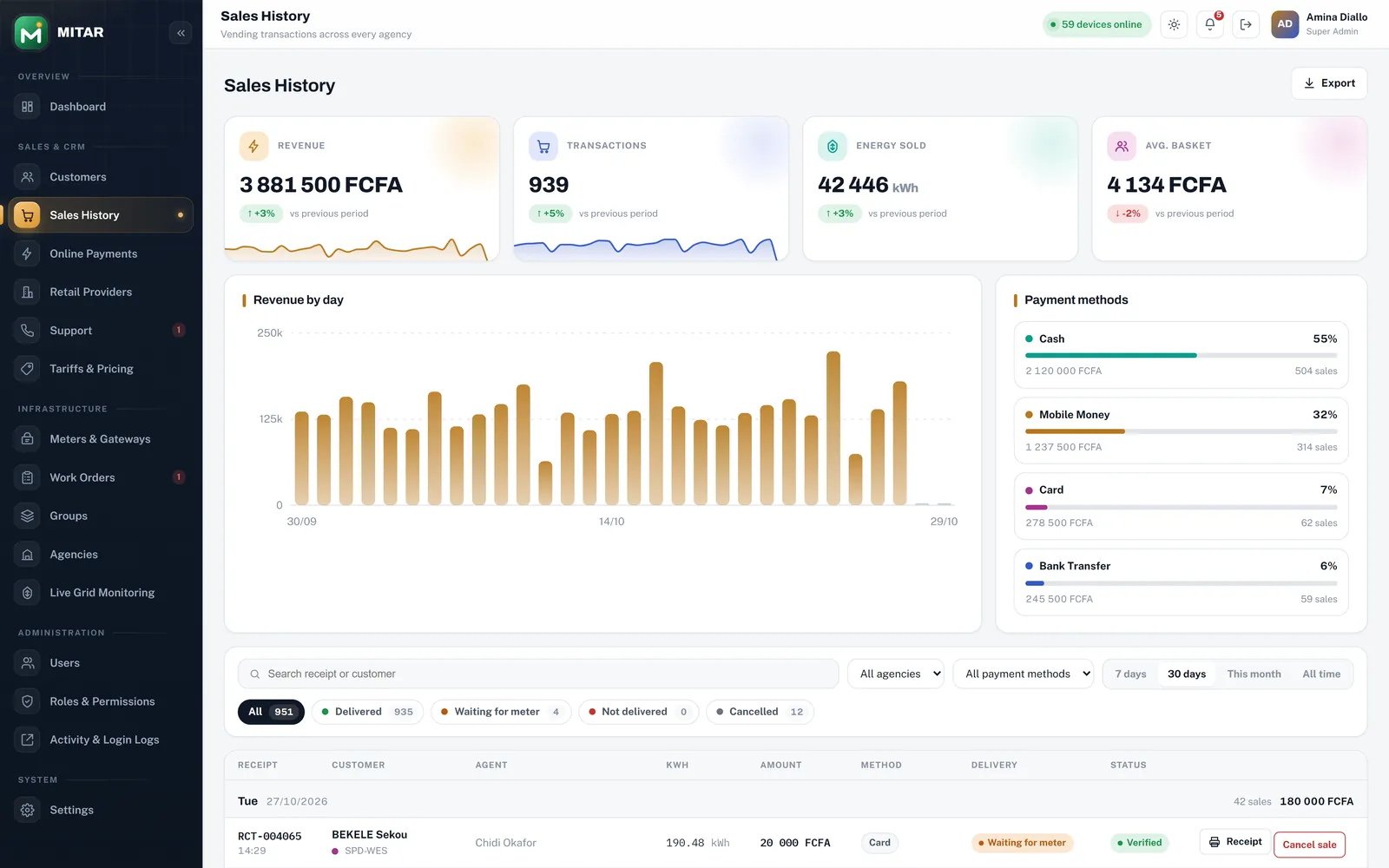
Agents sell to a chosen customer who has a meter, pick the tariff and the payment method, and print a two-copy receipt with a QR code.
The platform
Mitar connects what happens at the meter to what happens at the till, and back. The utility’s teams use it from one console, in English, French, Spanish or Arabic, while Mitar runs it.
Single- and three-phase prepaid smart meters with a remote supply relay and energy and power readings; three-phase meters also report alarms.
LoRaWAN, a long-range, low-power radio network used by meters. Gateways, which are radio base stations, bring meters online across a town or a feeder.
Prepaid sales and tariffs, encrypted credit delivery, the ledger, live monitoring, remote control, alerts and reporting.
Agency counters and retail providers who resell from a prepaid balance today; customers paying online once payment operators are connected.
A customer portal, a mobile app (test version), supervisor oversight, technician work orders and a console for the utility’s administrators.
Capabilities
Agents sell to a chosen customer who has a meter, pick the tariff and the payment method, and print a two-copy receipt with a QR code.
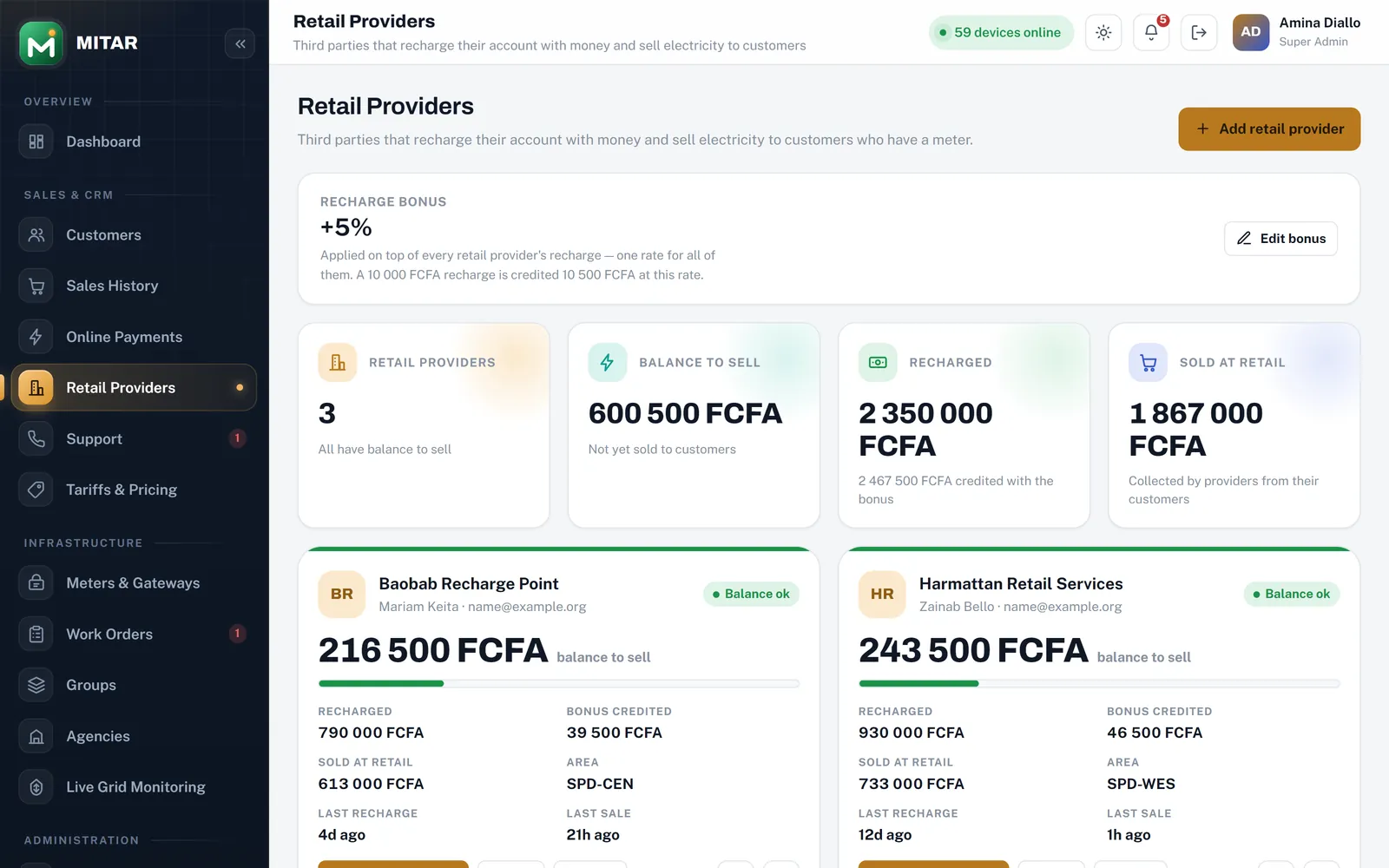
Retail providers prepay a balance that your staff record, with one bonus rate you set. They sell until it runs out.
Customers follow their meter and purchases in the portal and, in a test version, the mobile app. Buying online follows once operators are connected; none is live yet.
Each sale becomes an AES-128-encrypted command for that one meter, sent over LoRaWAN.
A sale is marked delivered only when the meter confirms: its acknowledgement, or its next report showing that the energy rose.
Cancelling a delivered sale sends a negative recharge; books and meter change together once the meter confirms.
Delivery is built but not yet confirmed on a real three-phase meter.
Authorised staff cut or restore a supply, one meter at a time or by group, with a preview, a recorded reason and per-meter tracking.
Set each meter’s overcurrent trip threshold and recovery time, individually or across a group.
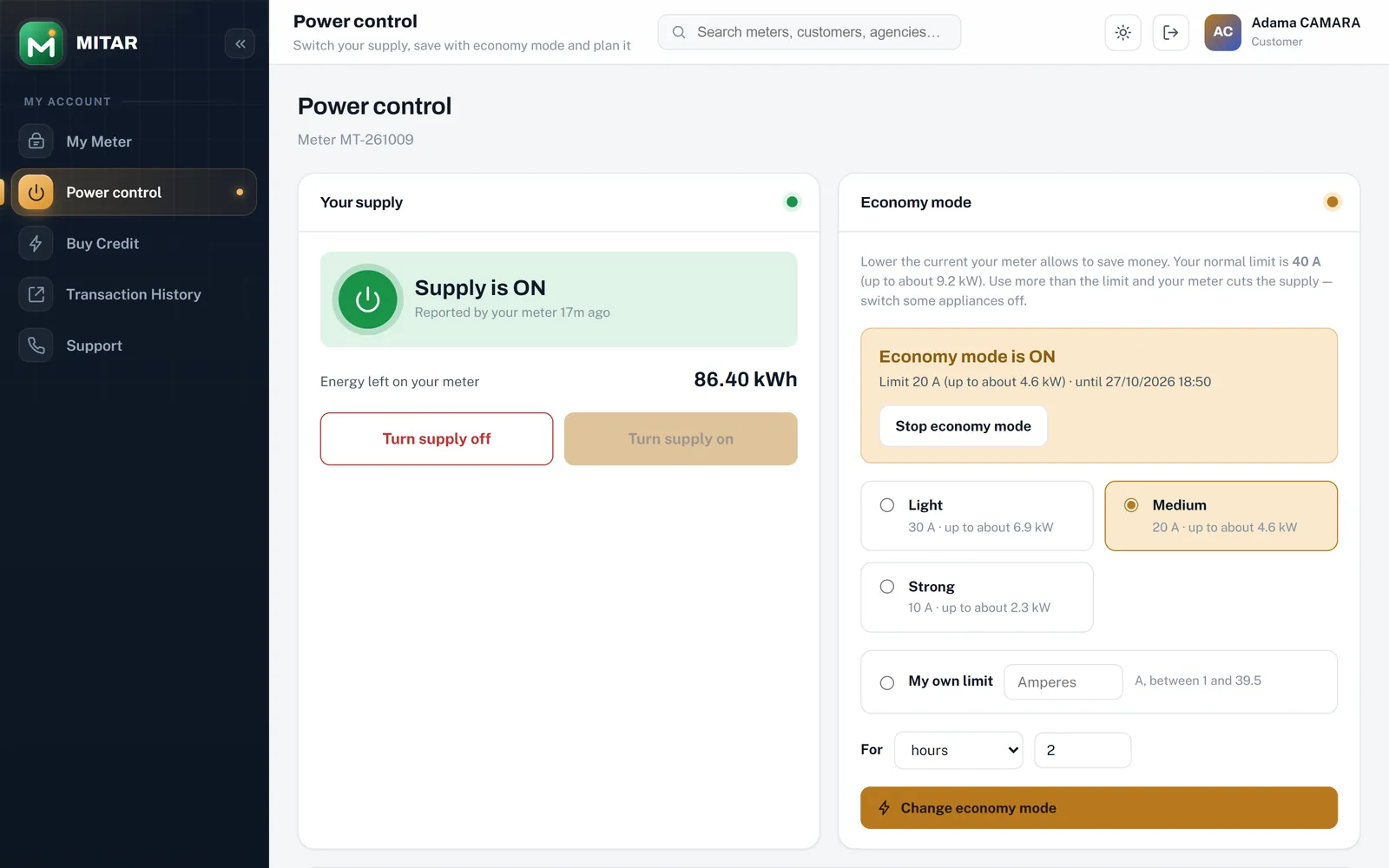
Customers switch their own supply, cap the current in economy mode and schedule weekly plans. The platform refuses to switch on when no energy is left.
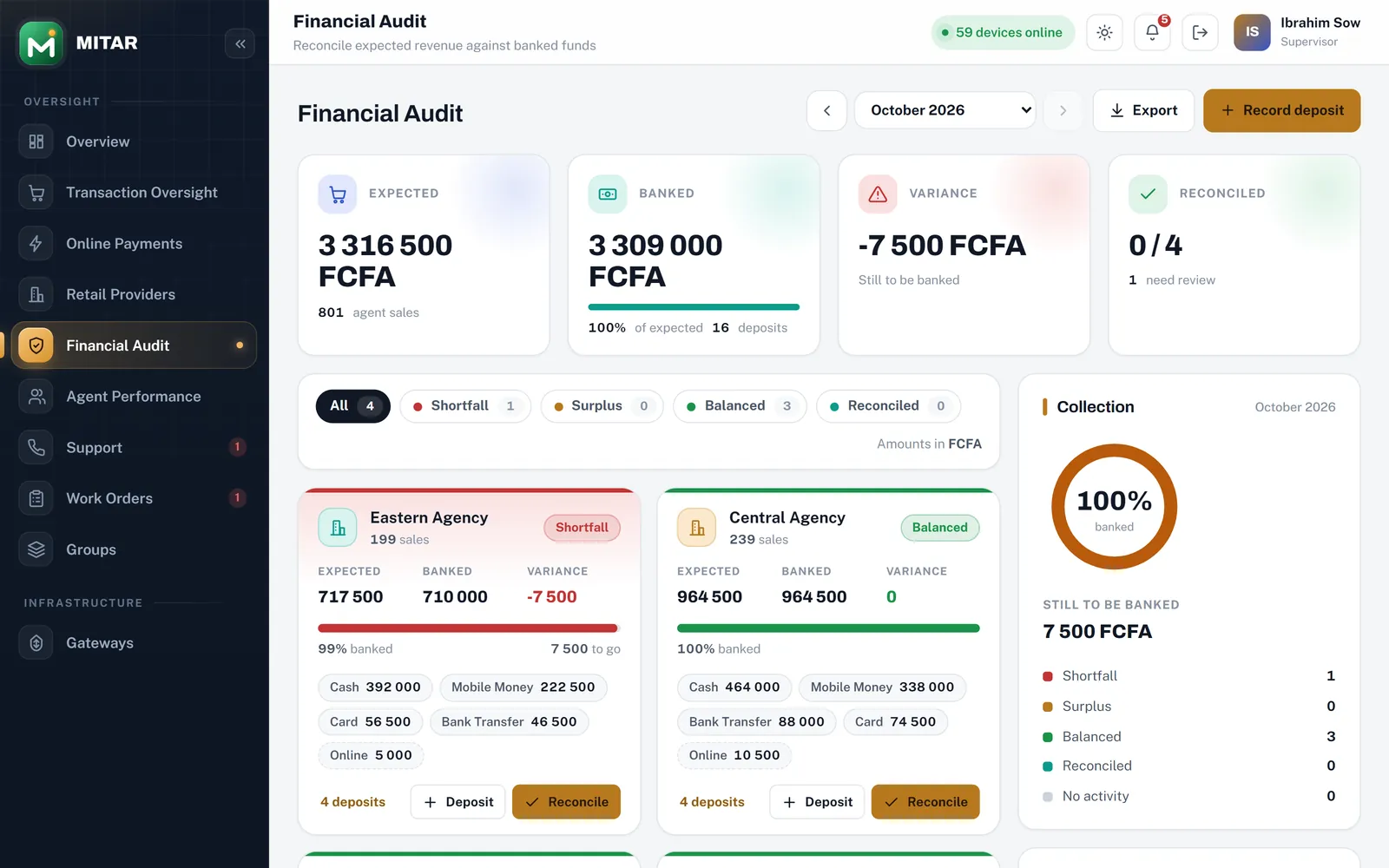
Expected cash from recorded sales, compared month to date with deposits recorded from bank statements, by agency, with a supervisor’s sign-off.
Supervisors flag, verify or cancel any sale. Unusual amounts, repeat purchases and credit that did not reach the meter are highlighted for review.
A QR code on every receipt shows whether it is valid or voided. Sales, administrative actions and sign-ins are logged and exportable.
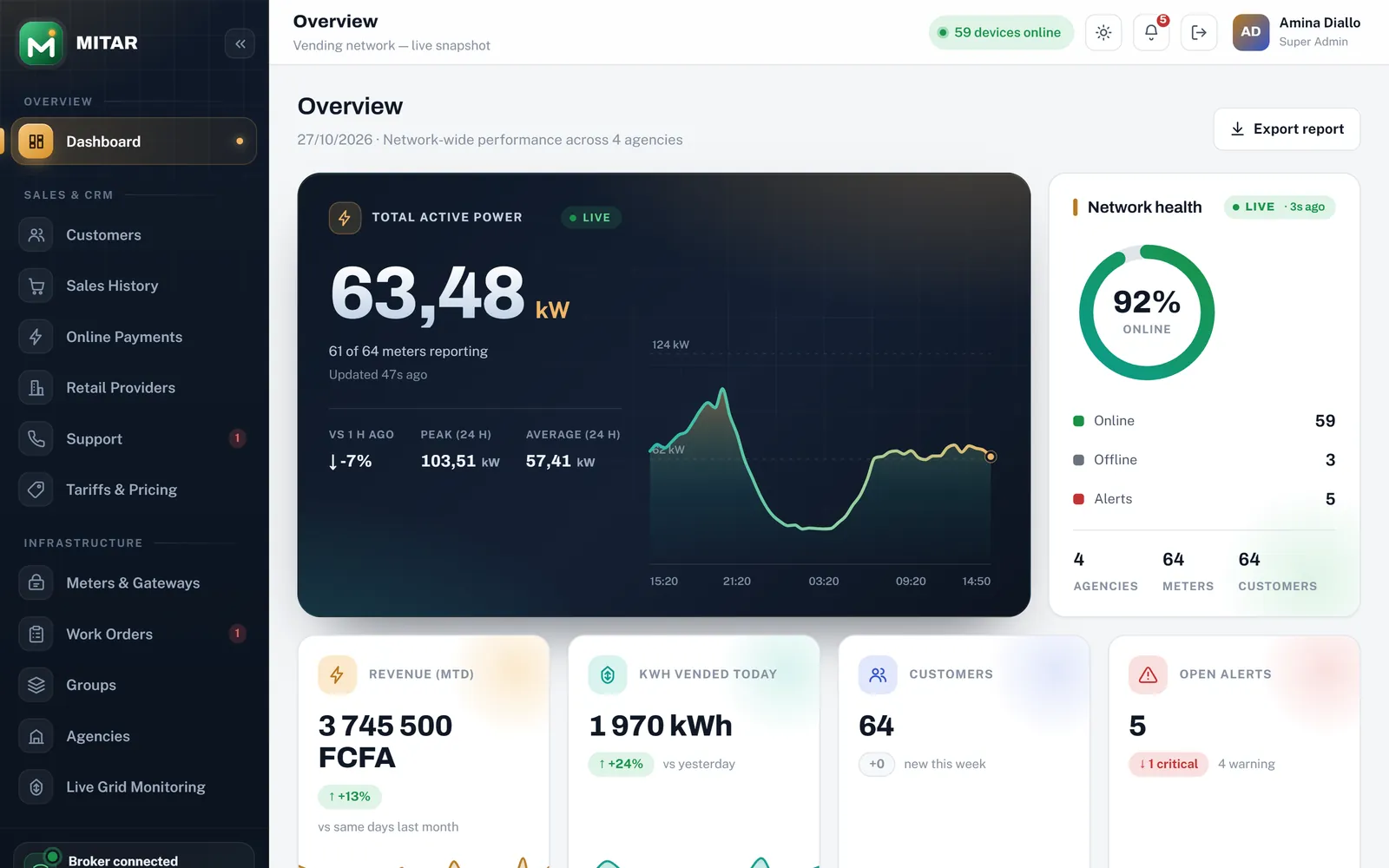
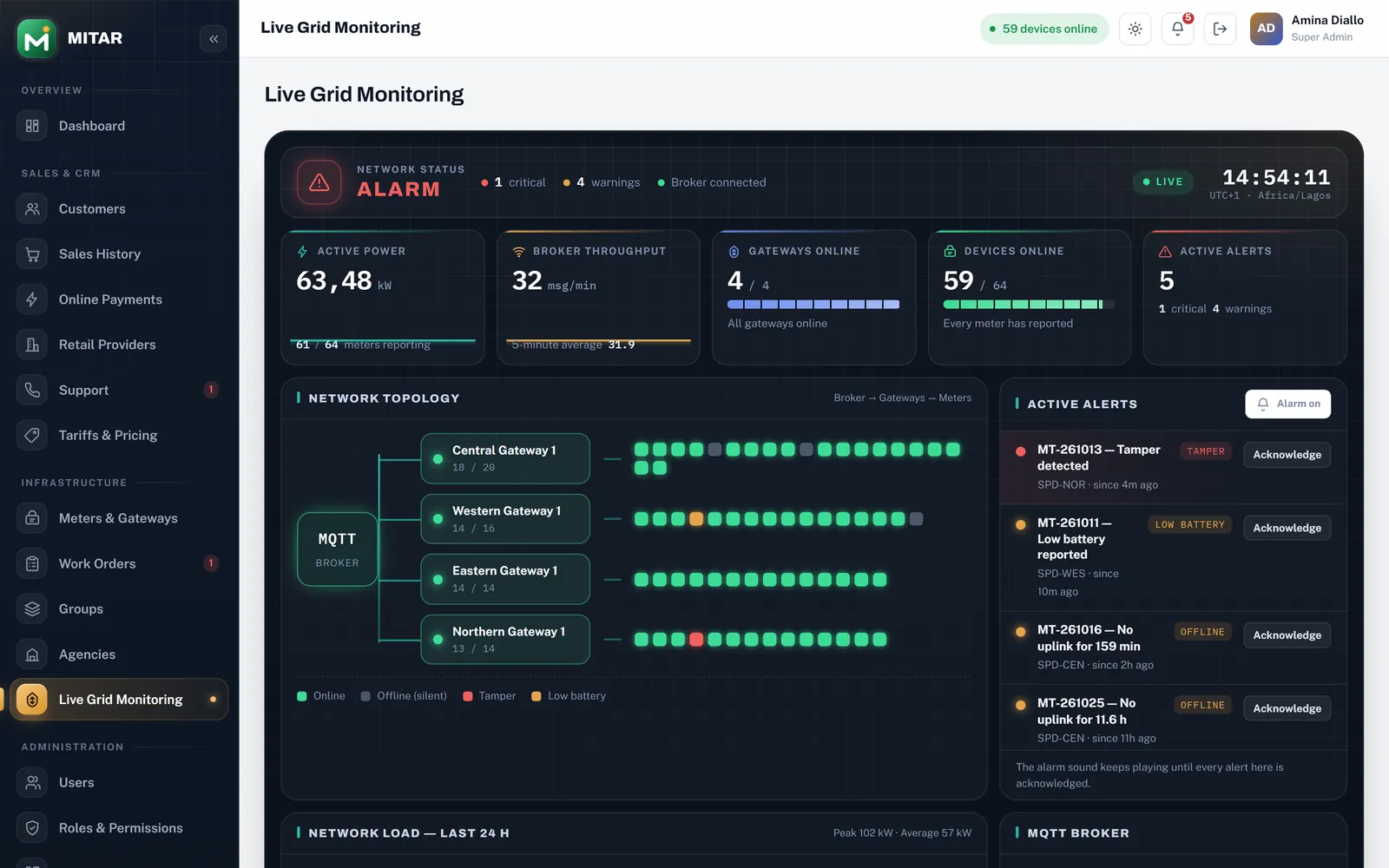
Meters and gateways online, total active power, the energy sold each hour and alerts, refreshed every few seconds.
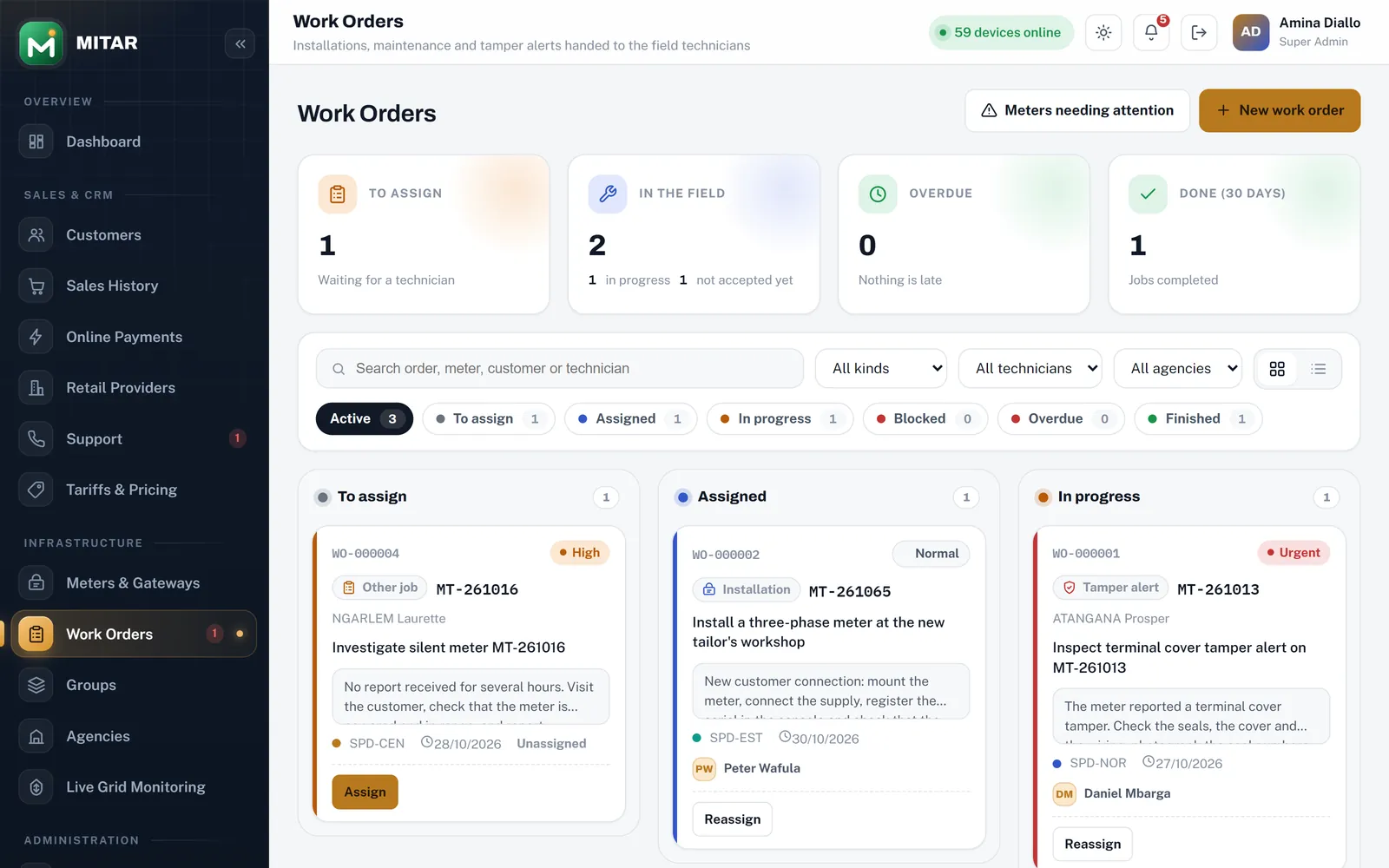
Installations, maintenance and inspections go to technicians with a full timeline; customer requests arrive as tickets.
Up to 200 meters of one agency per group; reporting interval, protection limits and operating mode changed over the air.
The platform
Seven roles work from the same live data, and each sees only what its role and agency allow. These screens come from a demonstration environment filled with fictional data. Payment methods such as Mobile Money or Card are labels an agent records for money collected at the counter; no payment operator is connected.
Roles and languages
Every request is checked on the server against the user’s role and agency. Sales agents and agency administrators see only their own agency’s customers and sales; field technicians can read every meter and gateway but change only their own agency’s.
The Arabic interface reads right to left. Some text stays in English: printed sale receipts, exports, the public receipt-verification page and certain error messages.